Showing posts with label Zsolt Czegle. Show all posts

Wednesday, October 29, 2025

Kaliber 38mm 1/72 scale ZU-23-2 anti-aircraft machine gun (by Zsolt Czegle)


ZU-23-2 anti-aircraft cannon from kaliber38mm


The ZU-23-2 or ZU-23 (Russian: ЗУ-23-2 – ЗенитнаяУстановка) is a Soviet-designed, double-barreled 23 mm anti-aircraft machine gun.

The ZU-23-2 machine gun was developed in the late 1950s. Its purpose is to destroy low-flying targets at a range of 2.5 km, armored vehicles at a range of 2 km, and to protectsoldiers and strategically important positions from attacks byhelicopters or low-flying fighter aircraft. The self-propelledanti-aircraft machine gun uses the same components and ammunition as the main gun of the ZSU-23-4 Silka, but is equipped with a fire control unit (1RL33) and an analog firecontrol computer (RPK-2). It entered service with the SovietArmy on March 22, 1960.

I have previously shown here what the kaliber38mm kit contains, now I will show you what I built from it.

The kit has already been revealed to me to be very detailedand includes a lot of accessories (ammo boxes, stacks, shellsand pods). So when I was planning the display of the cannon, I wanted to create an environment that shows a post-deployment state. (I have already received criticism that thecannon is not installed according to the specifications, theboxes and crates are too close, and there is no cover, etc.)

Due to the size and scale of the cannon, it is tiny, almost thesize of a matchstick. Therefore, I very carefully cut the partsoff the supports and carefully sanded their marks. There wereno problems with the fit.

After assembly, I sprayed it with MENG(AK) Russian Greenand modulated it with 4BO Shine. I shaded the matte surfacewith Ammo Shader. After that, I prepared it for the wash witha matte varnish. I made the needle wash with dark brown AK Enamel Wash. After 1-2 days of drying, I faded the colorswith oil paint and highlighted the protruding parts bylightening them. Since the whole model is "just green again", I tried to play with contrasts to give it a little life.I painted thelamps and the prism in chrome color, and after 1-2 days of drying, I painted it with RC transparent red.

I made the base with AK wet earth mass and placed theaccessories in it. After drying, I painted it with Green StuffWorld liquid pigments, so the surface became completelymatte.

After painting the boxes and crates, I glued on some grasstufts and "scattered" the cartridge cases. After a few looks I decided it could hold a few more boxes, so I painted somemore and placed them on the ground. Luckily I didn't manageto paint them all the same green, so that also gives thecomposition a bit of life.

I'm satisfied with what I've managed to get out of it now. Since I have another set of these in my bag, I'll build it towedby an URAL 4320 .

Thank you for your attention!

Zsolt Czegle...


Friday, September 5, 2025

Armour Models 1/72 OT-64 A SKOT (by Zsolt Czegle)


Hello dear friends,

Today's page was created by our dear Hungarian member Zsolt Czegle. On behalf of the "Miniafv" team, I would like to thank Zsolt.

Erhan..

____________________________

Hi,

The OT-64 SKOT (Czech: Střední Kolovy ObrněnýTransporter , Polish: Średni Kołowy The Transporter (German: Opancerzony Transporter) is a Czechoslovak-Polish amphibious infantry fighting vehicle with rubber wheels, developed in the late 1950s and early 1960s. The first prototype was completed in 1959 and entered service with the Czechoslovak People's Army and the Polish People's Army in 1964. The combat vehicle was manufactured in Poland at FSC in Lublin, but some components, such as the Tatra engine and the Praga transmission, were manufactured in Czechoslovakia. Serial production ended in the early 1970s, at which time approximately 4,500 units of this type were produced, one-third of which were exported. The vehicle was used in several local wars in the Middle East, Asia, and Africa. (Source: Wikipedia)

Last year at the Mosonshow 2024 I received this OT-64 SKOT armored personnel carrier from the manufacturer Slovakian company Armour Models. The manufacturer's product range includes several versions in both 1:72 and 1:35 scale. Naturally, I built the model in 1:72 scale.

The construction itself was not a difficult process. What was unusual so far was the "release" printed on the box for the components. As more and more 3D-printed models come onto the market, we are slowly getting used to the technique of removing support structures. The manufacturer offers several of each of the many individual parts in case they break or fly off during separation. The only thing we get is one from the headlight, which broke off while I was painting it, but I found it in the vacuum cleaner bin (at least it tidied up a bit around the workbench).


The parts fit together well, only the rear panel of the armor needed to be sealed. The tool holder is so thin that I bent it from thin wire. According to the photos, the taillights and front indicators had protective grilles, so I made those from partial wire as well. All the handrails were imprinted with the armor and therefore did not need to be replaced. However, two of the doors were missing, which I replaced.

After priming, I sprayed Russian Green and modulated the surface. Then I airbrushed the shades with Ammo Shader and applied with decals and a semi-gloss finish. After the needle wash, the vehicle's small details, previously hidden on the light gray surface, became visible.


I then used oil paints to create the gradients and added additional contrast to the upper horizontal surface. I painted the tires of the wheels in a rubber color and then imitated the dirt with Ammo Shader, and drybrushed it with a with lightened gray .


Since the photos showed that the exhaust pipe was rusty, I used the sponge technique to imitate the rust spots. I painted the metal parts of the tools gray and the handles in light beige and buff colors.

I wanted to show minimal dirt on the model, so I sprayed Green Stuff World’s liquid pigment only in the wheel arches and the bottom of the vehicle The dirt streaks and were created with AK pens.


The manufacturer supplies the lenses for the lamps as 3D lenses, so painting is not necessary. At the very end of the build, the vehicle received two rearview mirrors from the photo-etched rearview mirror set of Hauler .

The kit is recommended for anyone interested in Cold War-era Eastern Bloc vehicles, but it can also be used to build IFOR and SFOR vehicles. The simple shape of the kit allows for easy removal of the 3D-printed supports, making the separation effortless even for those who have never done this before.

Thank you for your attention, I hope you like the final result!

Zsolt Czegle...


Friday, June 20, 2025

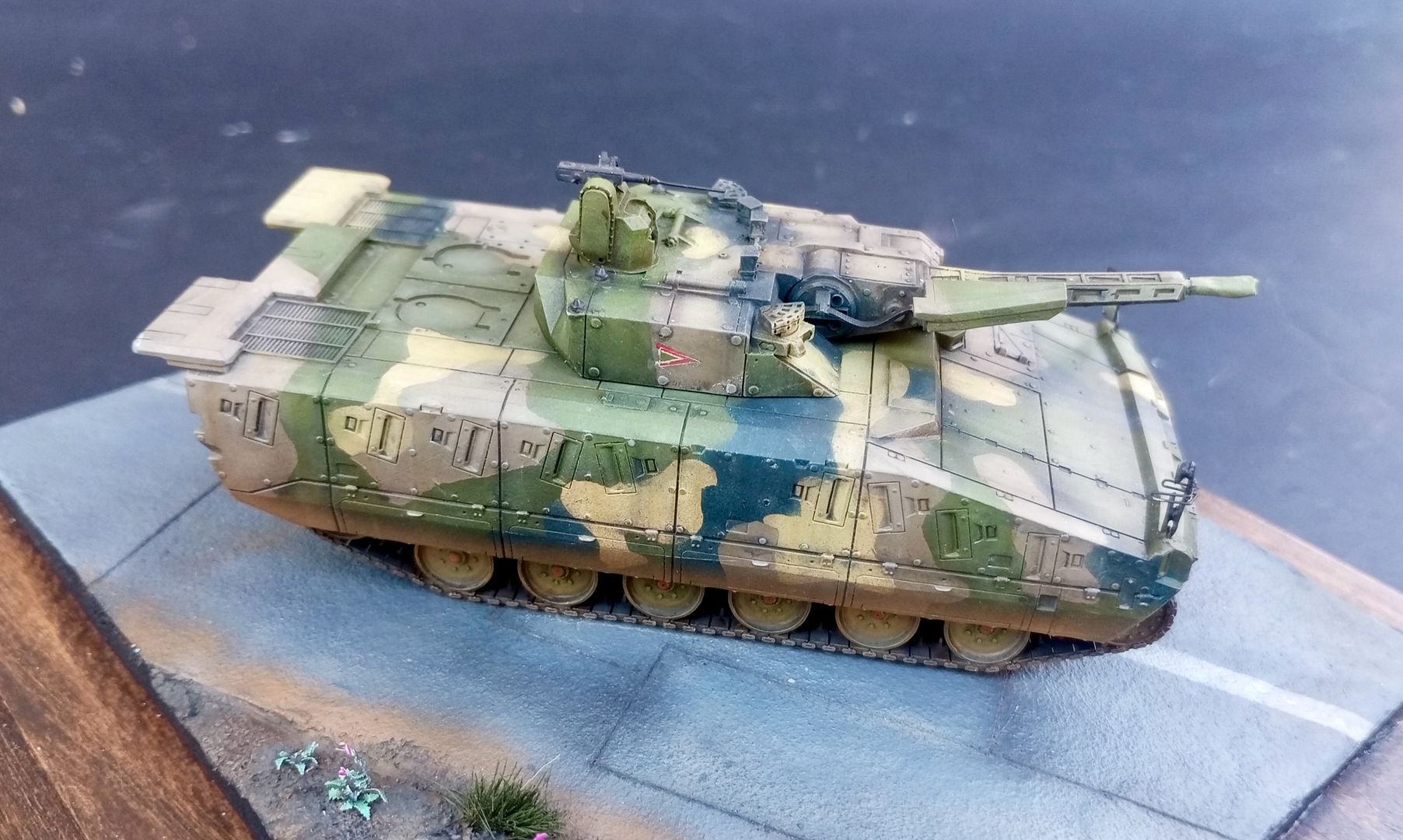
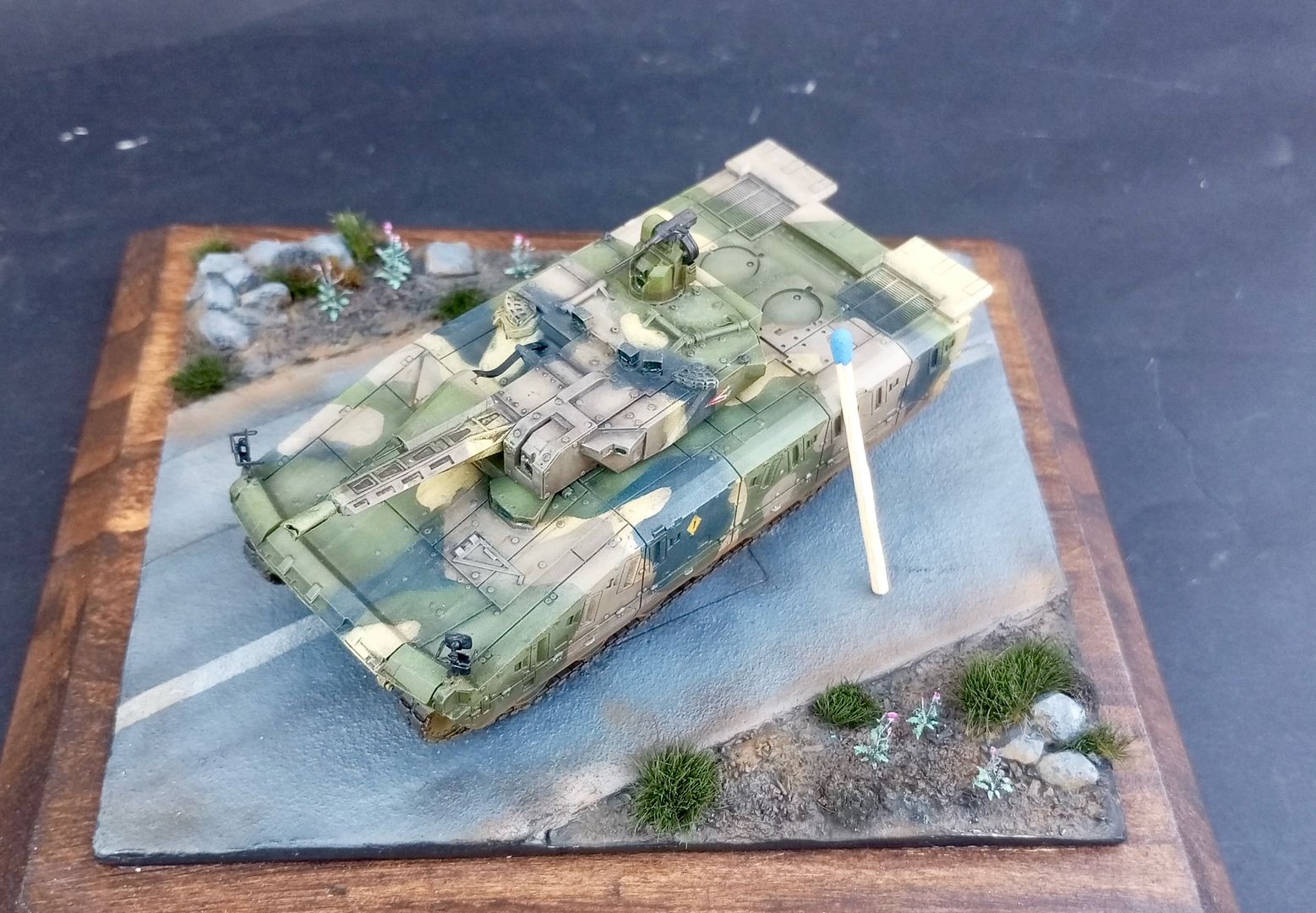
Armada Hobby 1/72 LYNX APC - Hungarian version (by Zsolt Czegle)


Hello dear modeller,

Today's page was prepared by dear Zsolt Czegle.. Thank you my friend...

Erhan...

___________________


Hi,

The Lynx is an armoured infantry fighting vehicle developed by the German company Rheinmetall . Landsysteme GmbH. The Lynx combat vehicle family represents the latest generation of combat vehicles: it has strong active and passive protection, armament and a number of advanced sensor and reconnaissance systems that enable rapid situational awareness in combat. The Lynx is a versatile combat vehicle with a modular design. This means that the roof armor and the various gun turrets and equipment that fit it can be removed and replaced at the same time . The Lynx can be transformed from an armored personnel carrier (IFV) to a casualty transporter in just a few hours of assembly work.

The Lynx infantry fighting vehicle was first presented in KF31 configuration on June 14, 2016, and the KF41 version on June 12, 2018, at the Eurosatory defense exhibition. The first operator of the Lynx KF41 is the Hungarian Defense Forces, the first serially produced copy of which was officially handed over on October 25, 2022.
(source Wikipedia )

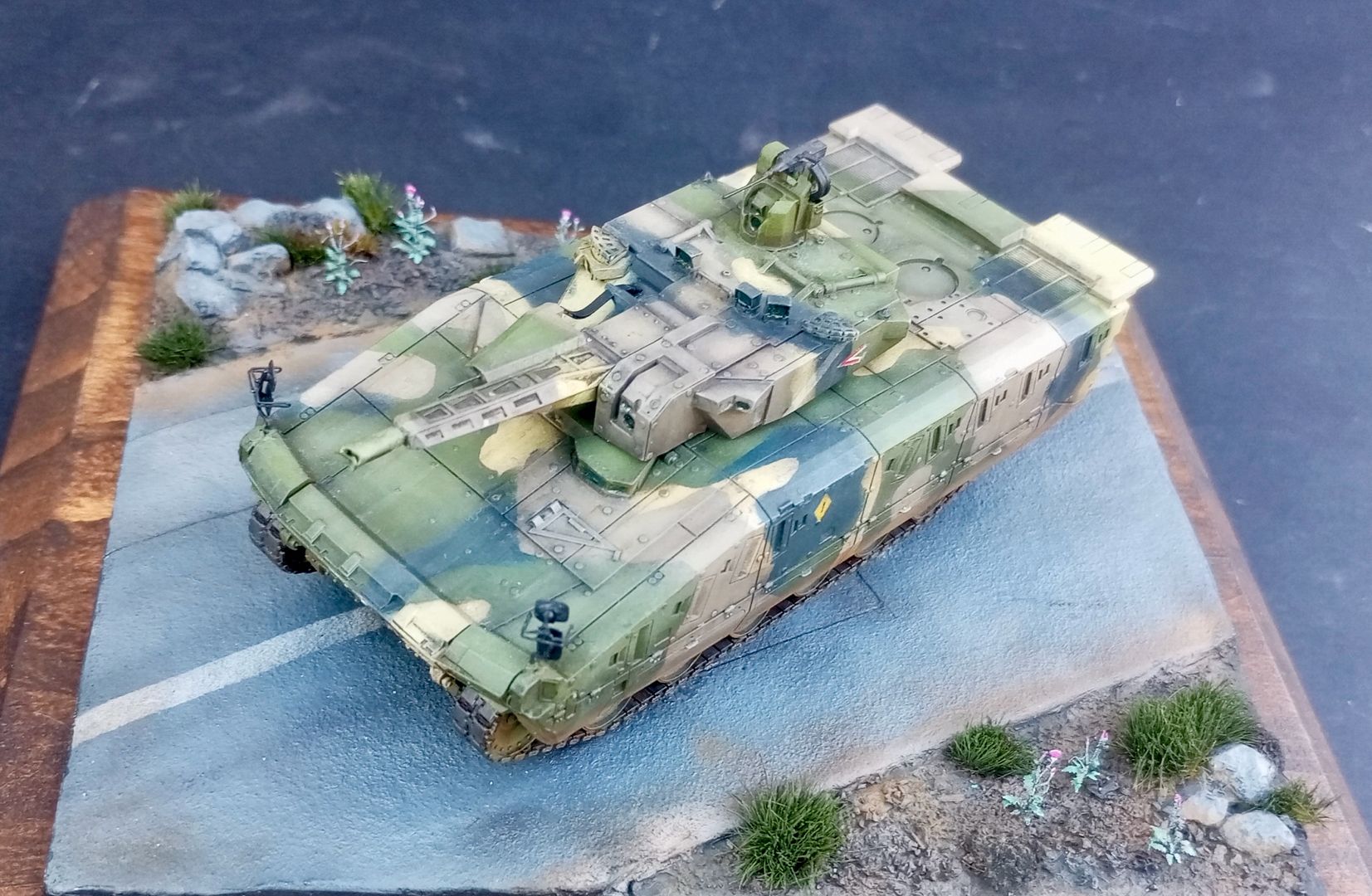
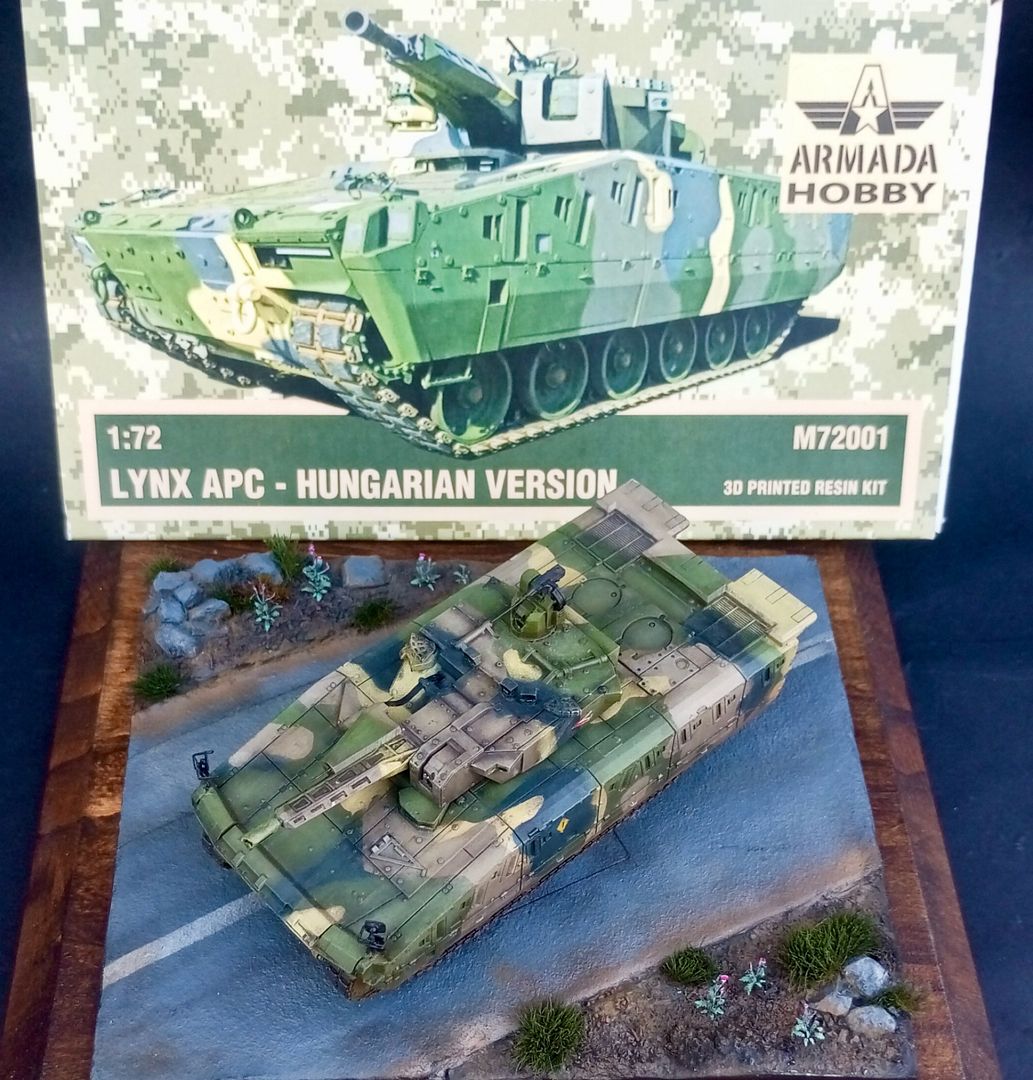
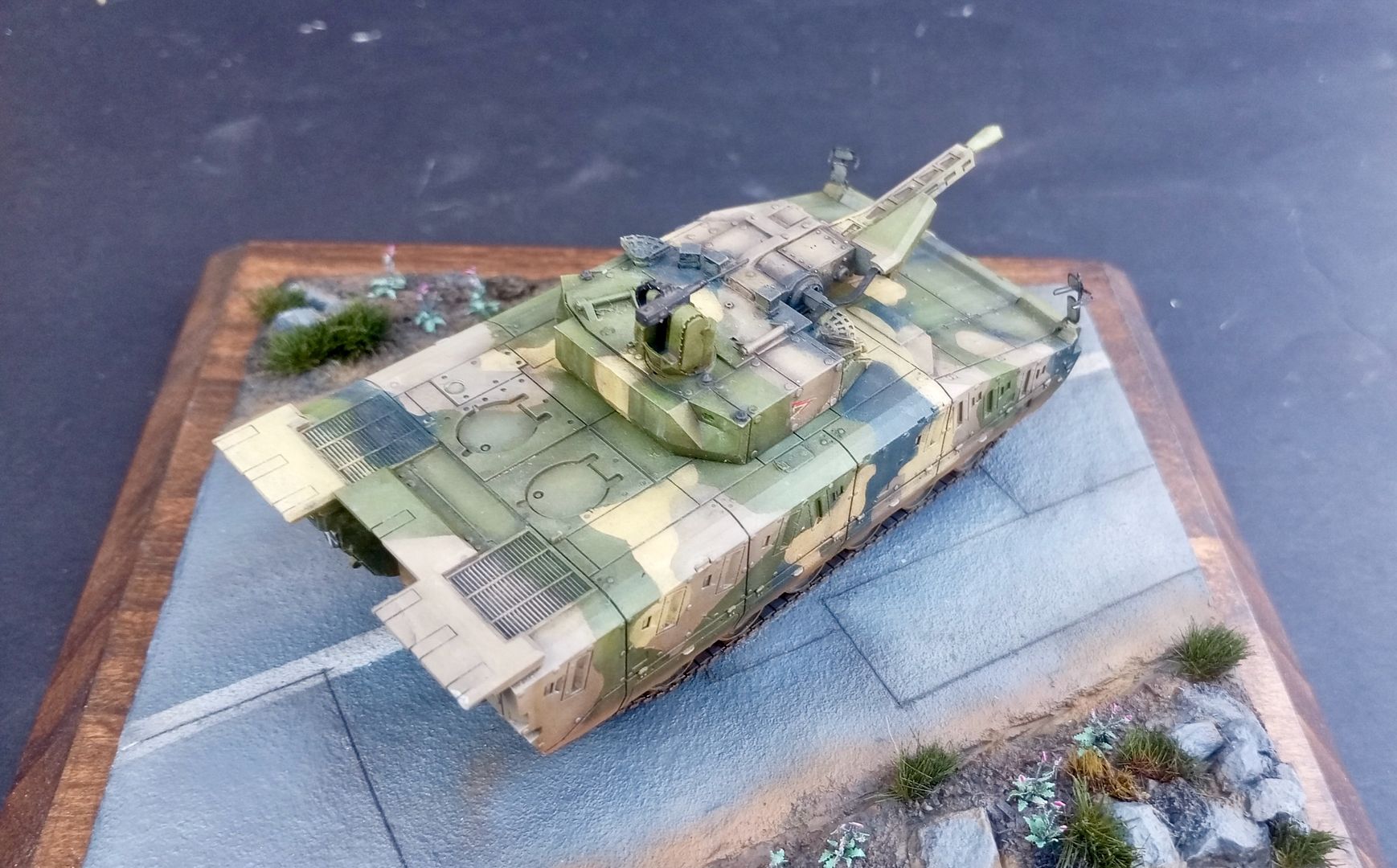
To my knowledge, the Hungarian LYNX has only been released in model form by the Hungarian company Armada Hobby. I received a copy from the manufacturer to build and present.


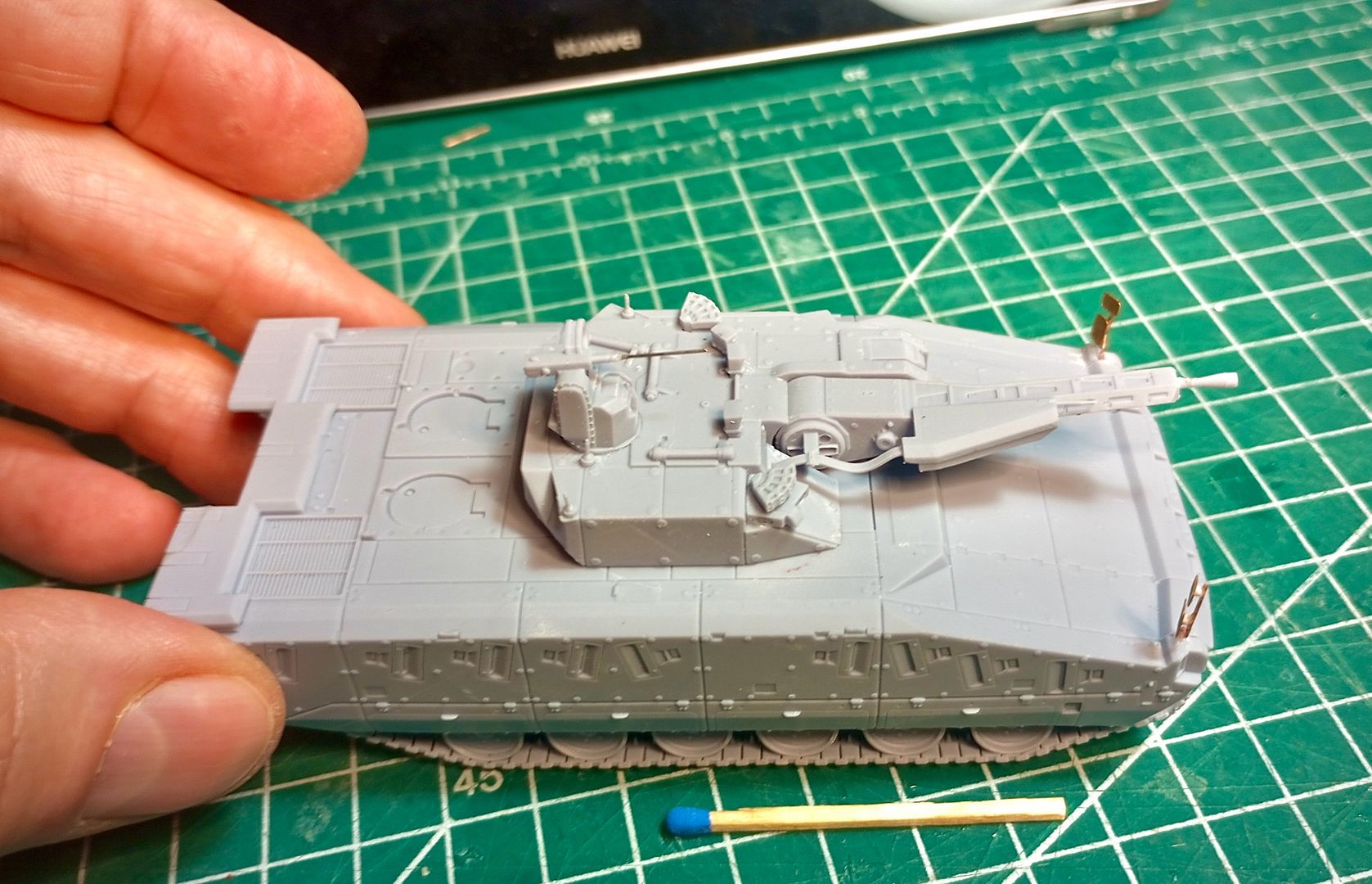
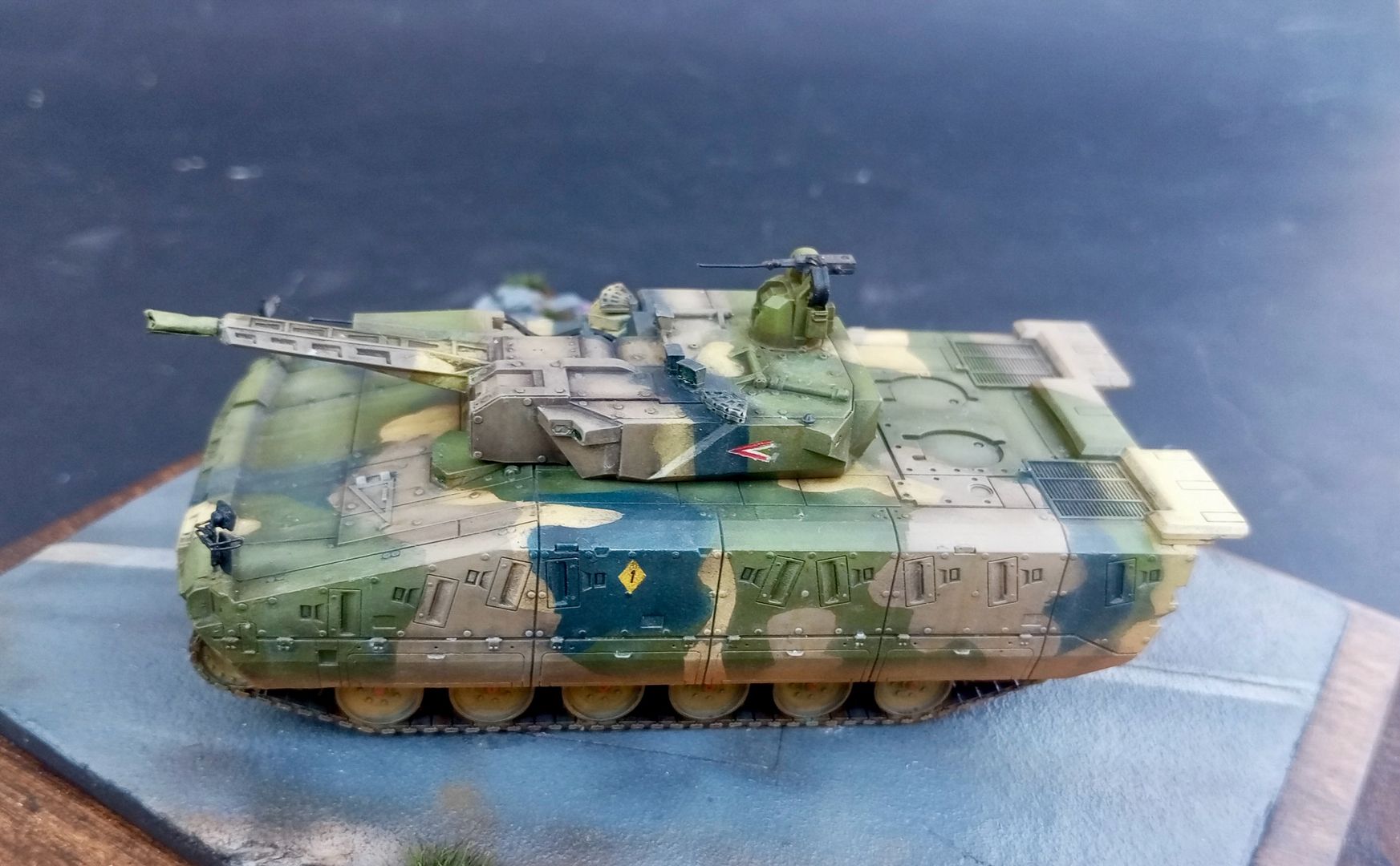
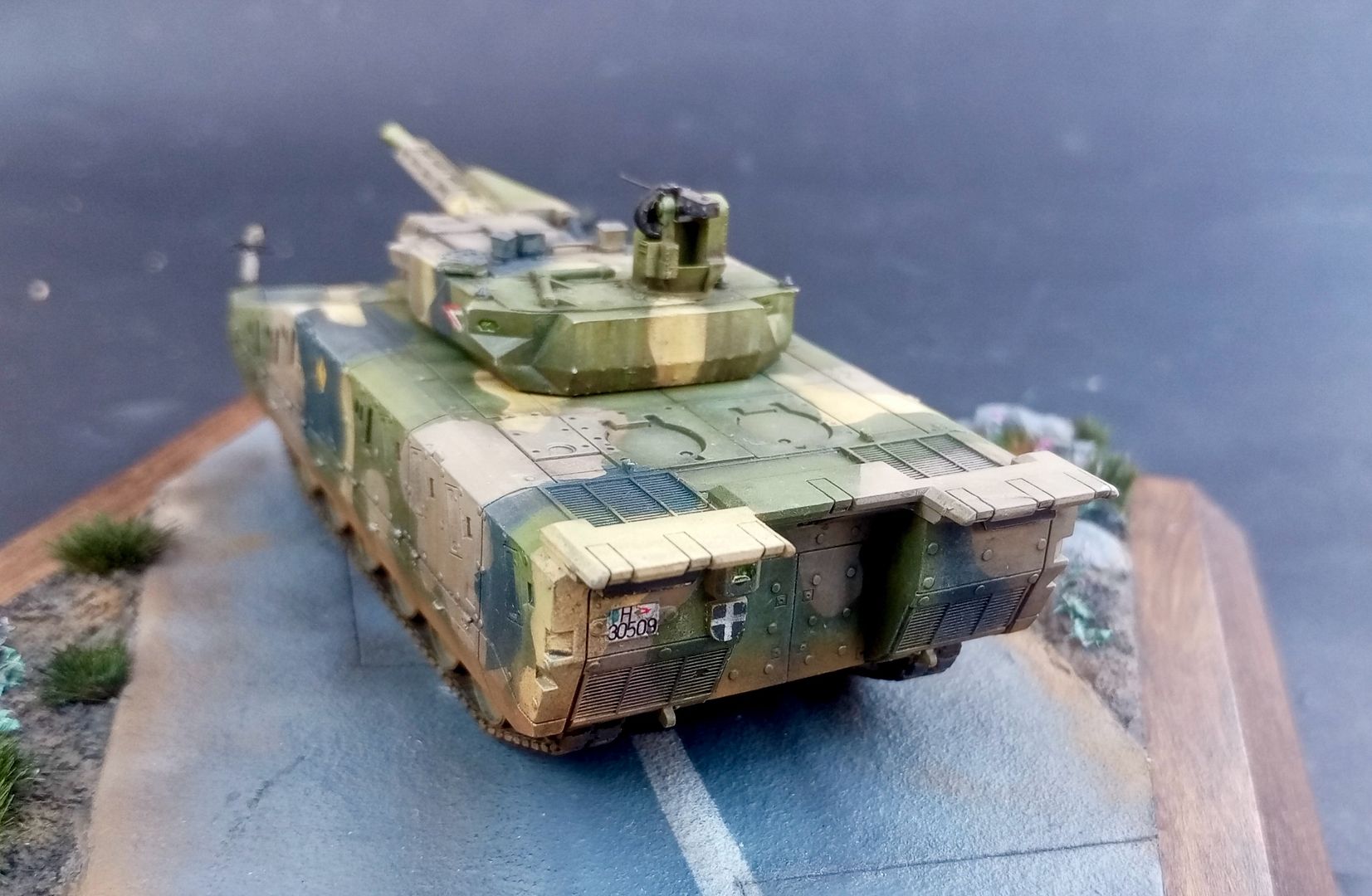
The kit was made with 3D printing, in keeping with the era. The surfaces are very beautiful and detailed. The assembly is quick, as it does not consist of many parts. I made only one improvement to the model: I replaced the rearview mirrors with Hauler's photo-etched mirror kit, and I bent the holder and the protective frame from wire.

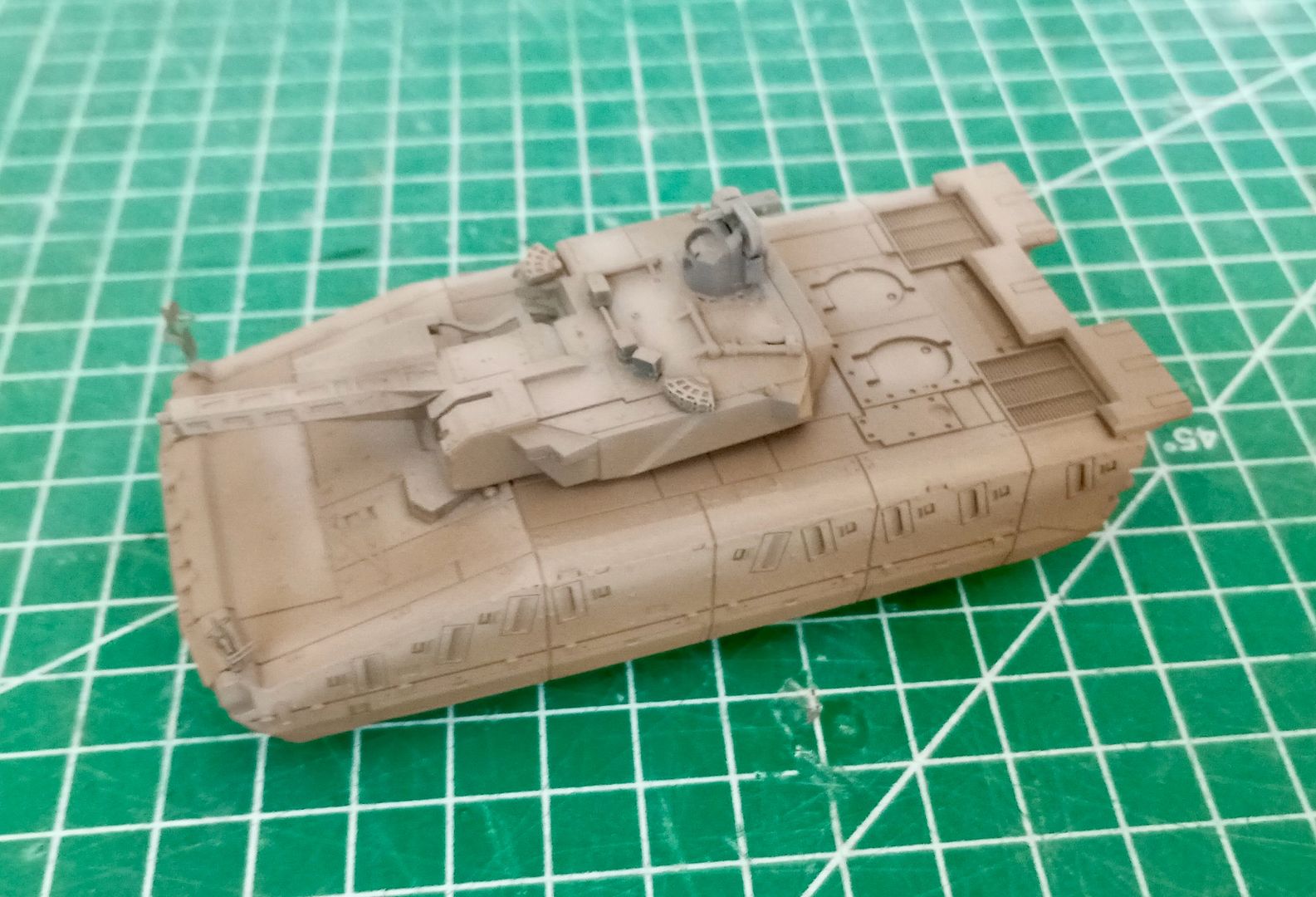
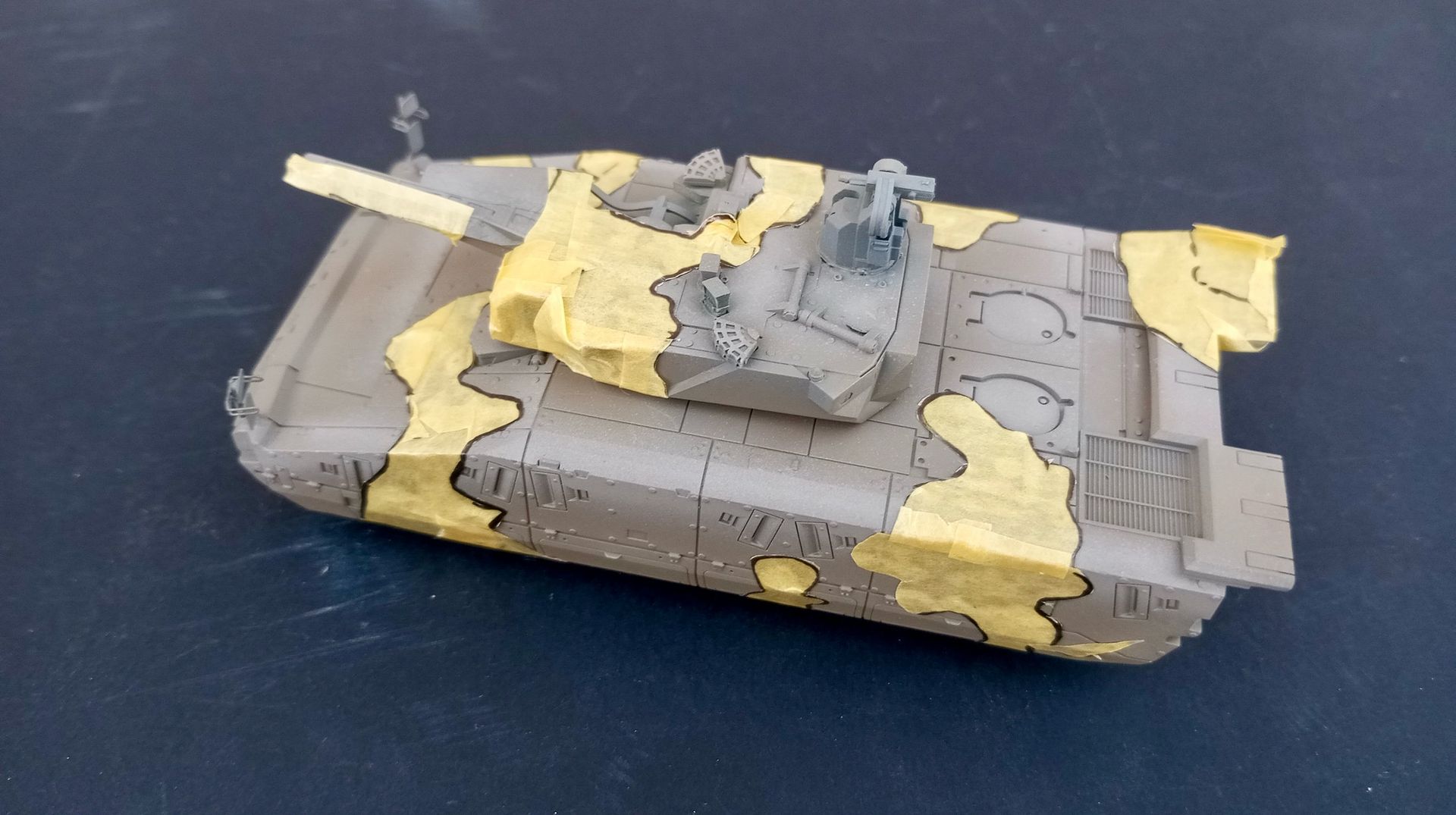
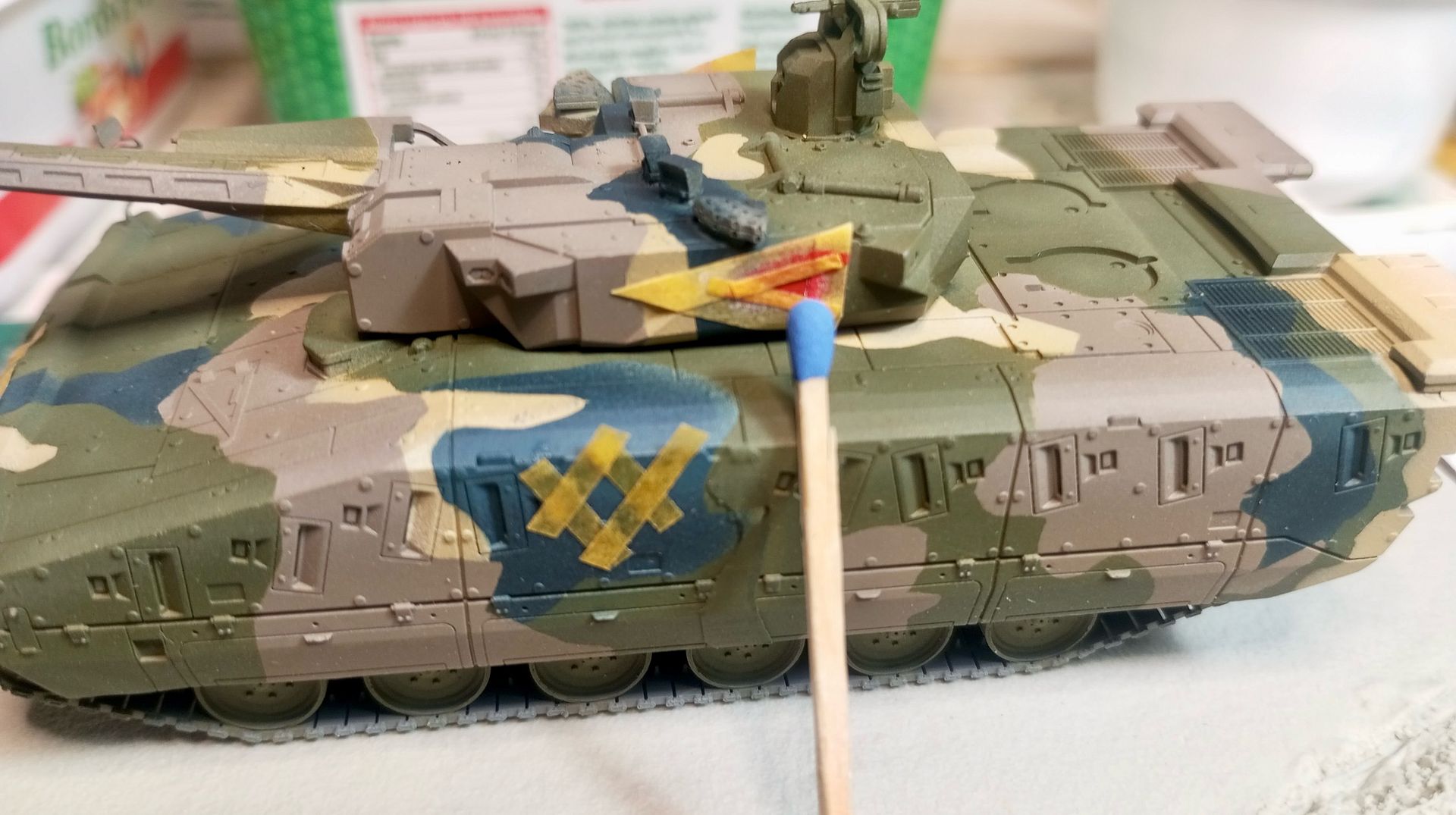
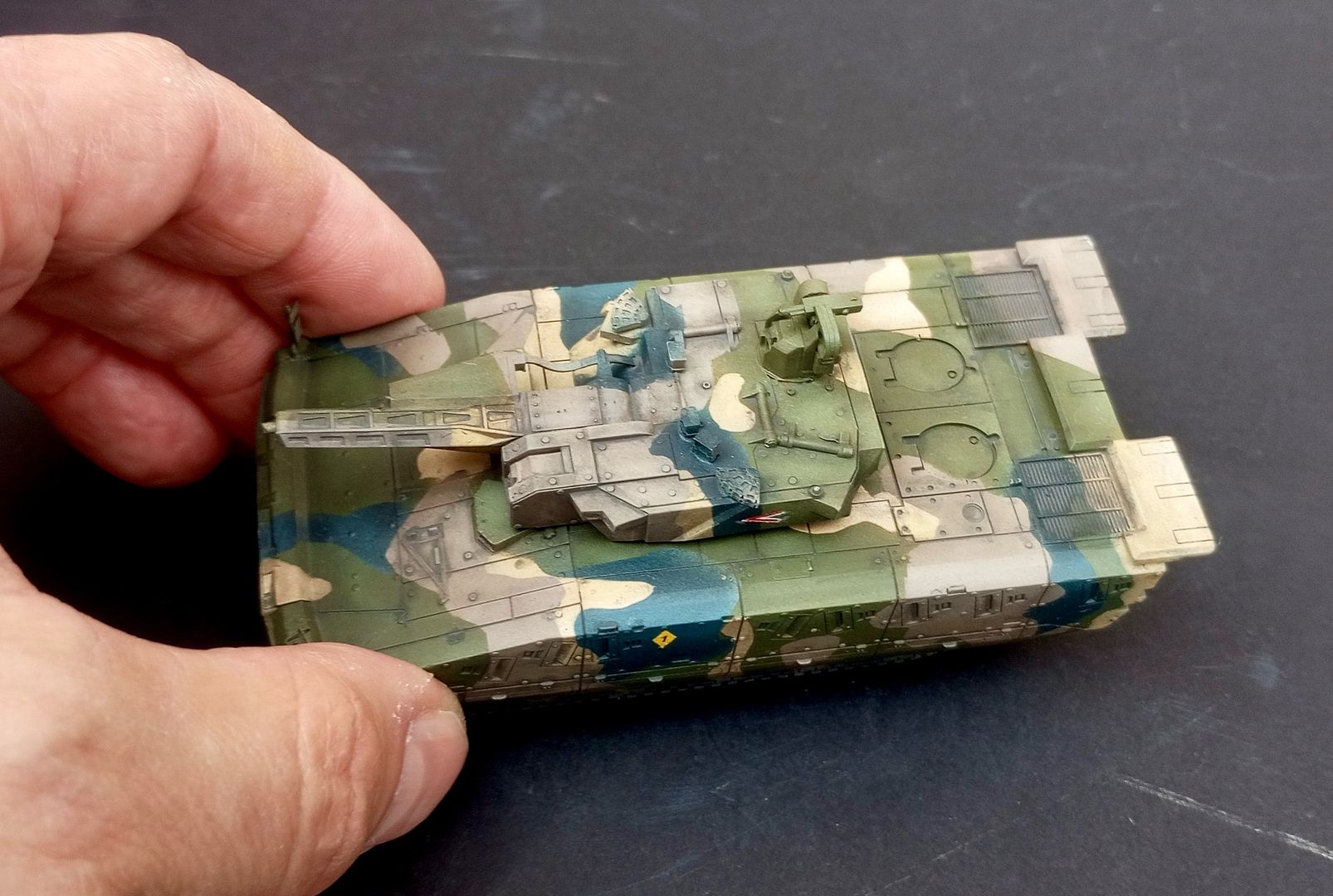
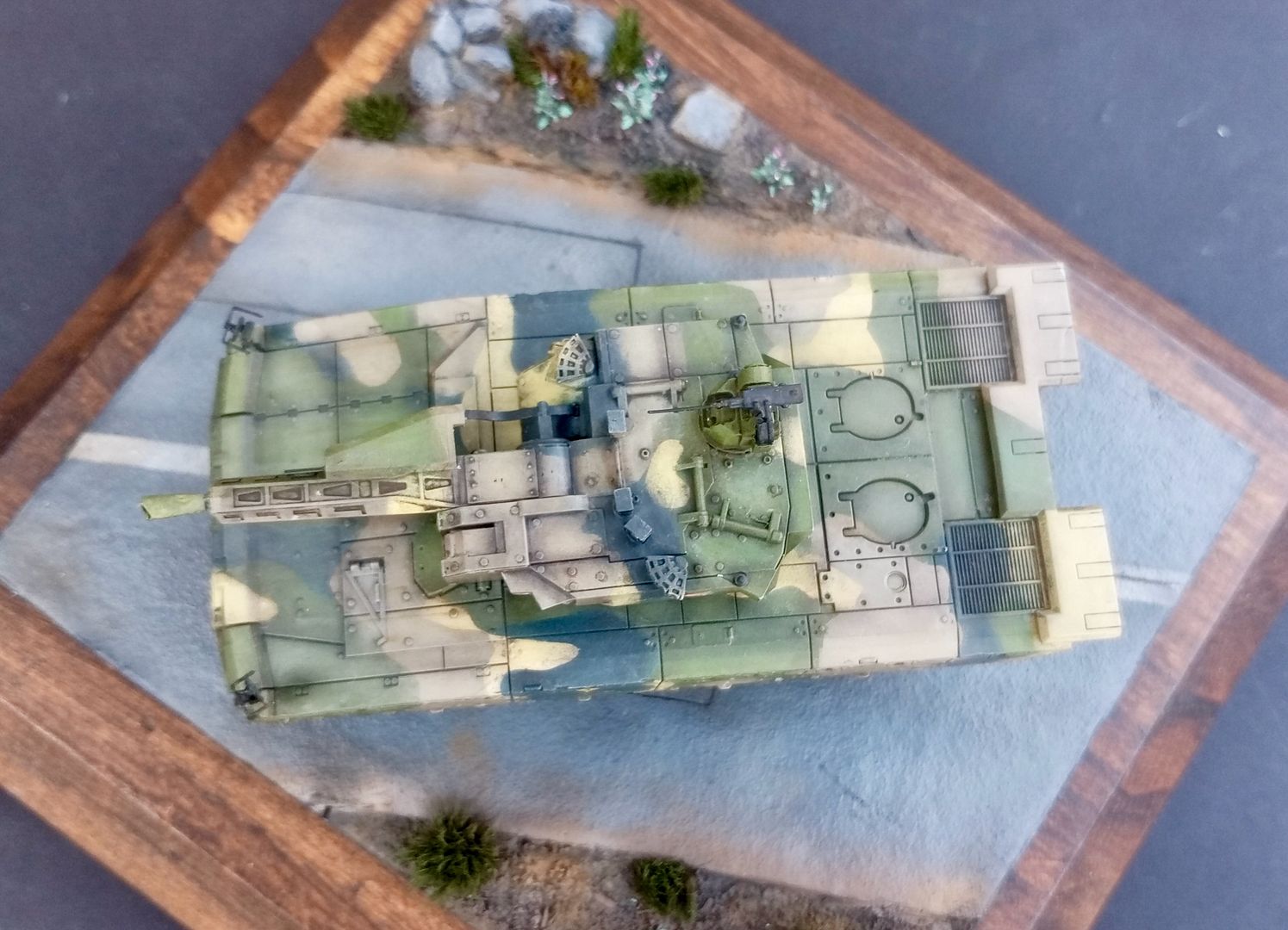
Before the construction, I drew the 4-color camouflage patch map based on photos found on the internet, which is almost the same for all vehicles. After the priming, I sprayed the entire vehicle with brown (I did not note the exact color mixing ratio). After the color modulation, I masked out the brown spots. After this, the yellow color followed using the same method (I lightened it from 2nd VH Hungarian yellow) and then the dark gray shade (RAL 7016). After all three colors and their masking were applied, I sprayed the entire vehicle with NATO Green.


After removing the masks, I determined that the paint job met my expectations, since the manufacturer does not include stickers with the kit, so I masked off and sprayed the Hungarian wedges on the tower, and a yellow diamond on the left side of the body, as well as the license plates. I cut out the numbers and letters for the license plate and the yellow diamond from the remaining stickers.


Before the varnishing, the surface was still nice and matte, so I used Ammo Shader to create the shading. Then the vehicle received a coat of varnish and I used enamel to do the needle wash. I softened the colors on the surface with oil paint and highlighted the higher parts with light.

I painted the tracks gray and washed them with Trackwash enamel. After drying, I painted the rubber pads with tire color and gave them a minimal lightening by dry brushing.

The prisms and optics with chrome and after drying, painted them with transparent green and blue colors.

I didn't want to show any wear and rust on my vehicle at all, so I just sprayed dirt and mud imitation on the lower parts with liquid pigment , and "drew" dirt stripes on it with AK watercolor pencils.


The base is the Polish White Stork Miniatures product, on which I scratched the traces of multiple potholes in accordance with Hungarian roads . The plants are a few tufts of grass and the Model Scene's photo-etched thistles

Thank you for your attention!

Zsolt Czegle ....
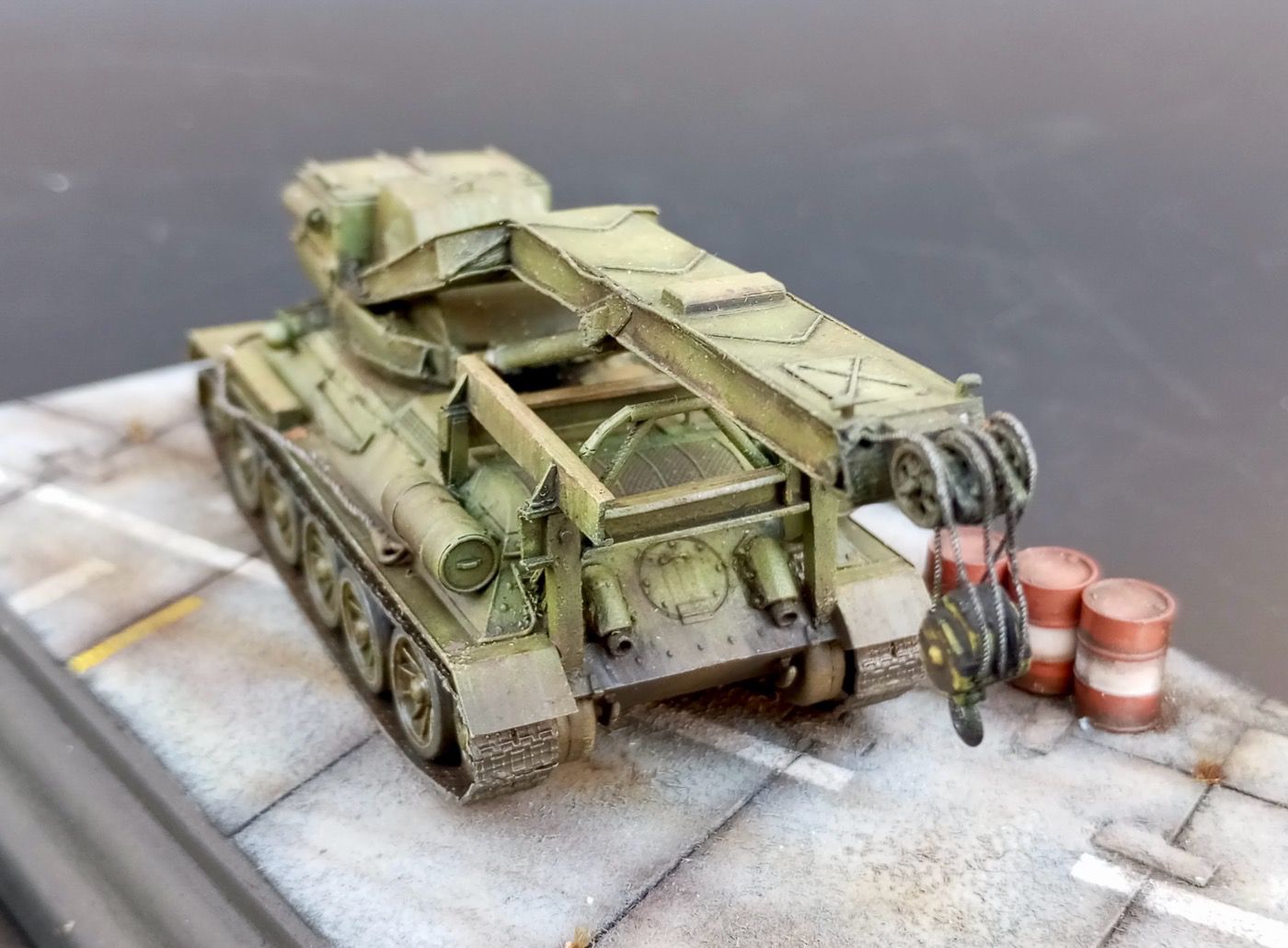


Friday, July 12, 2024

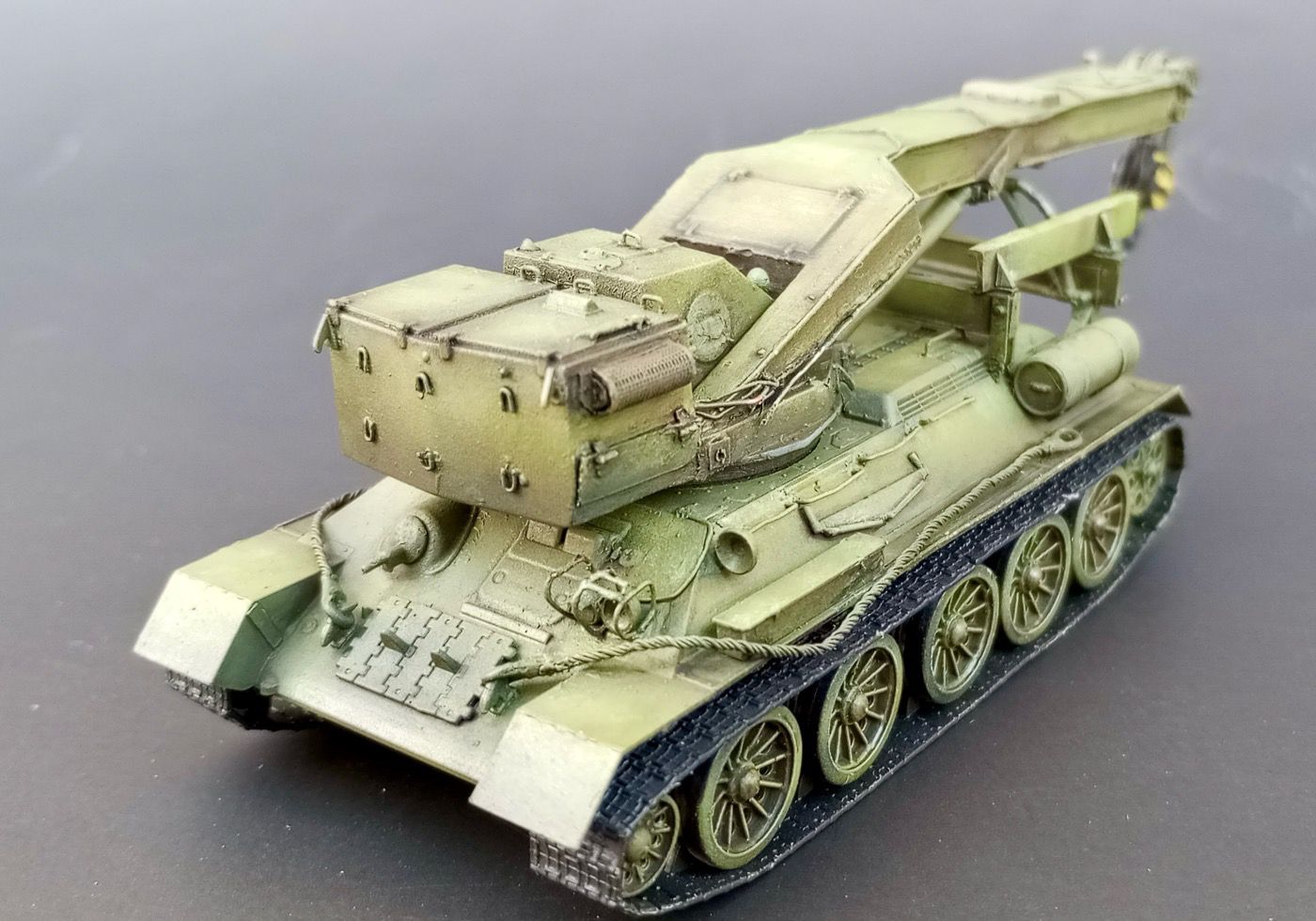
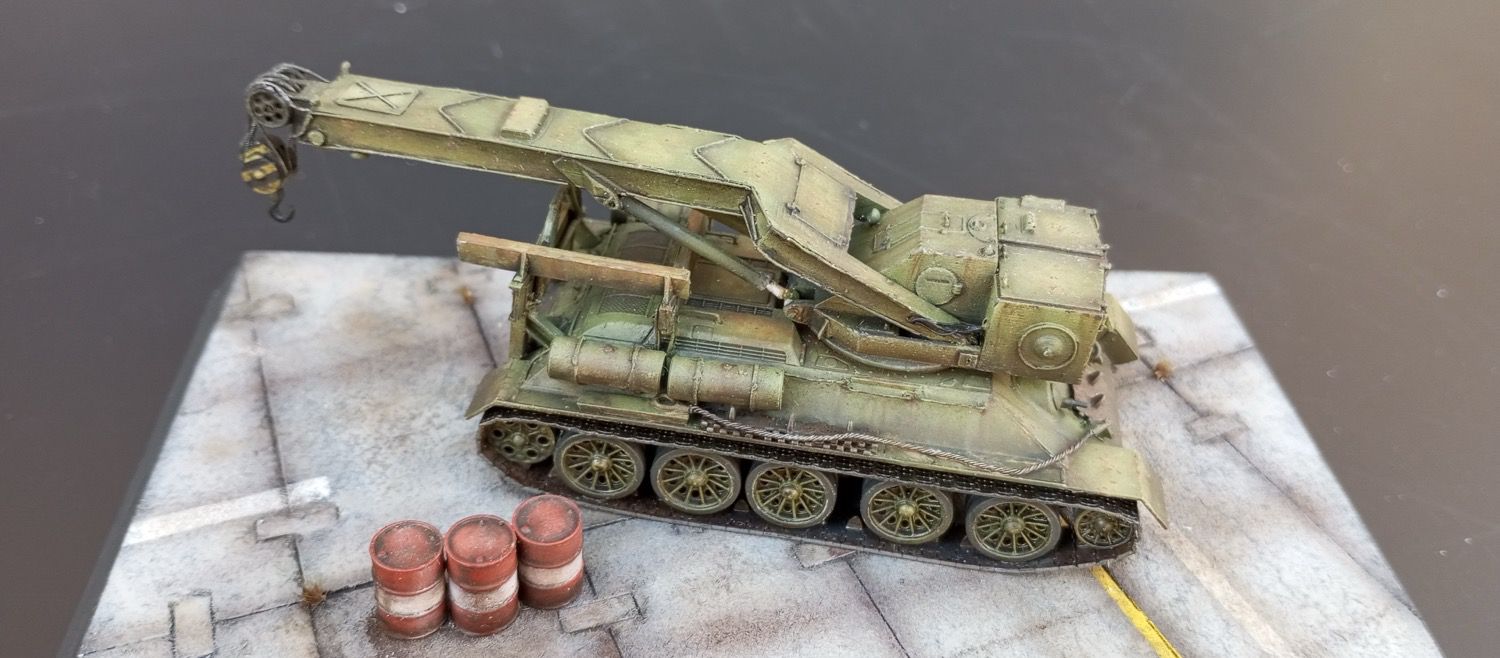
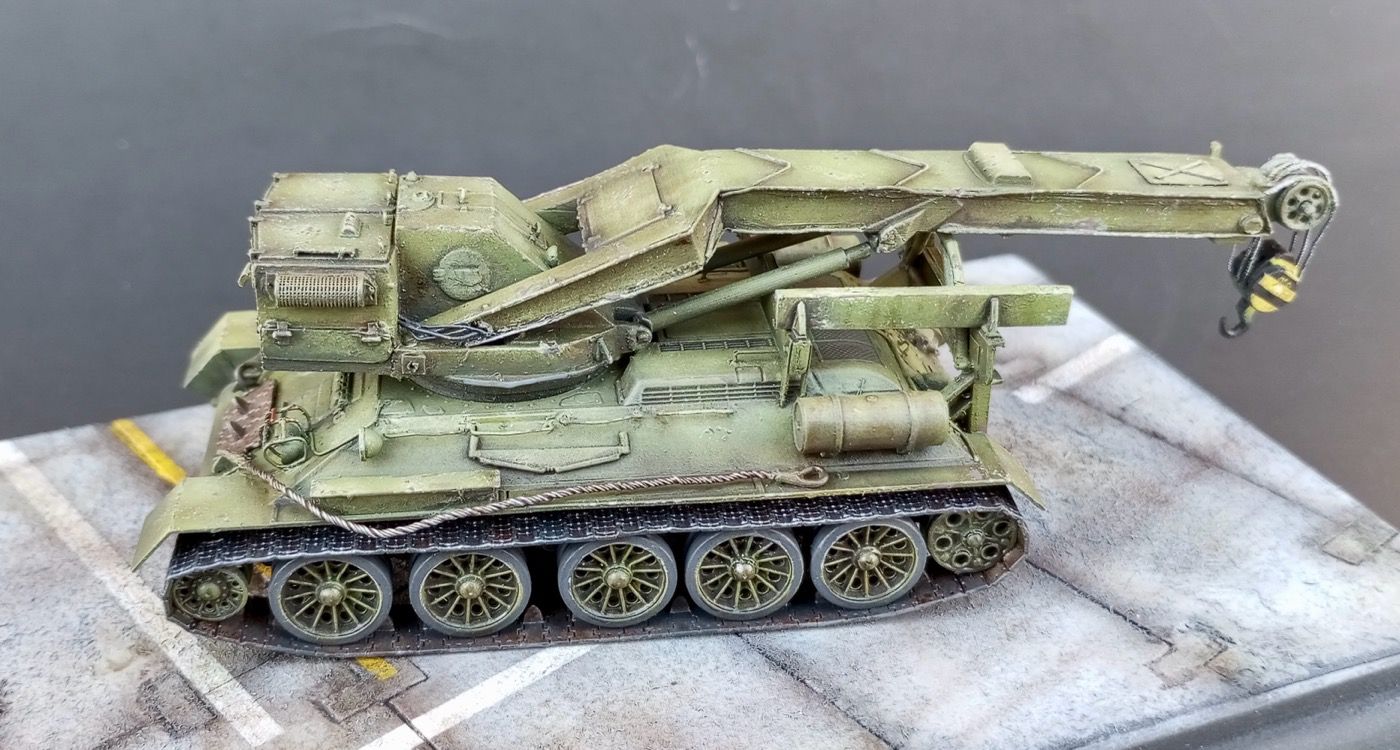
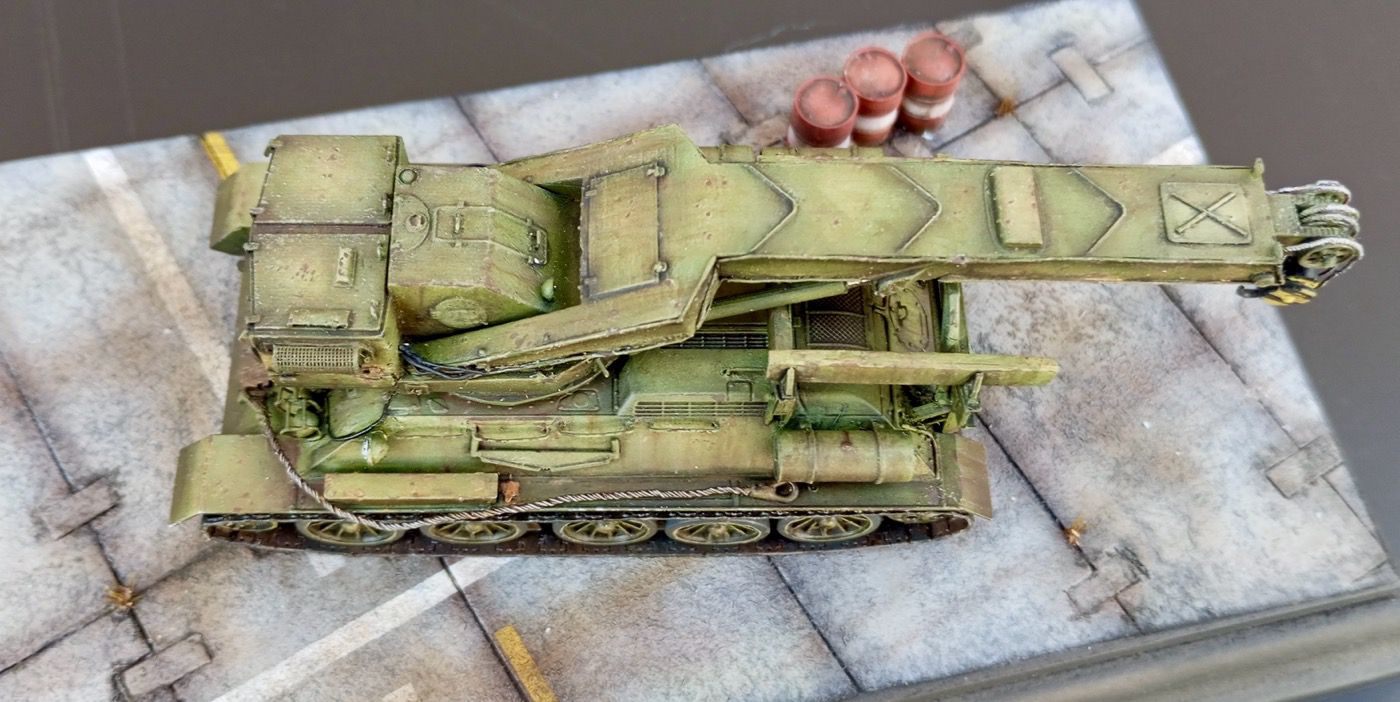
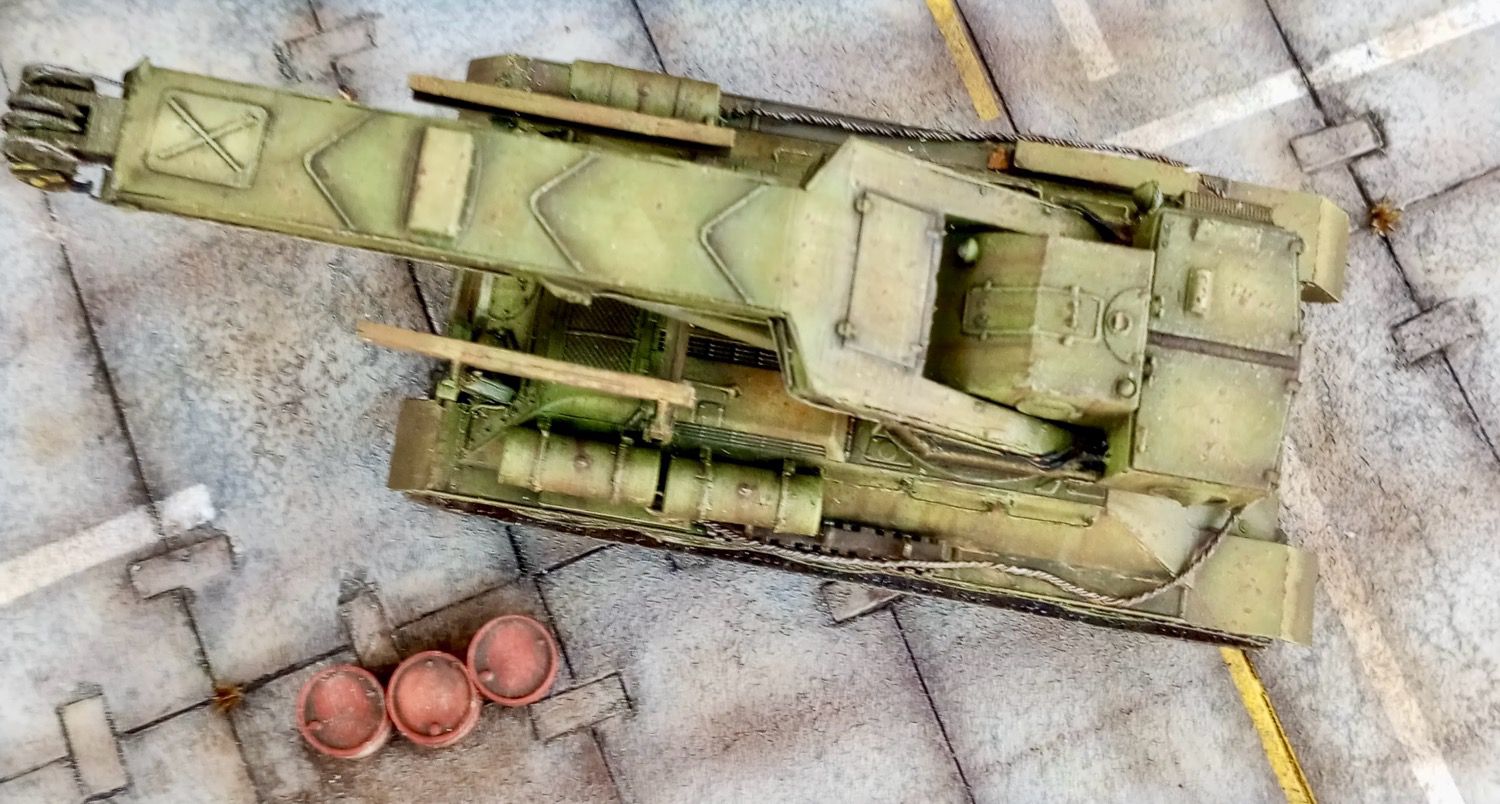
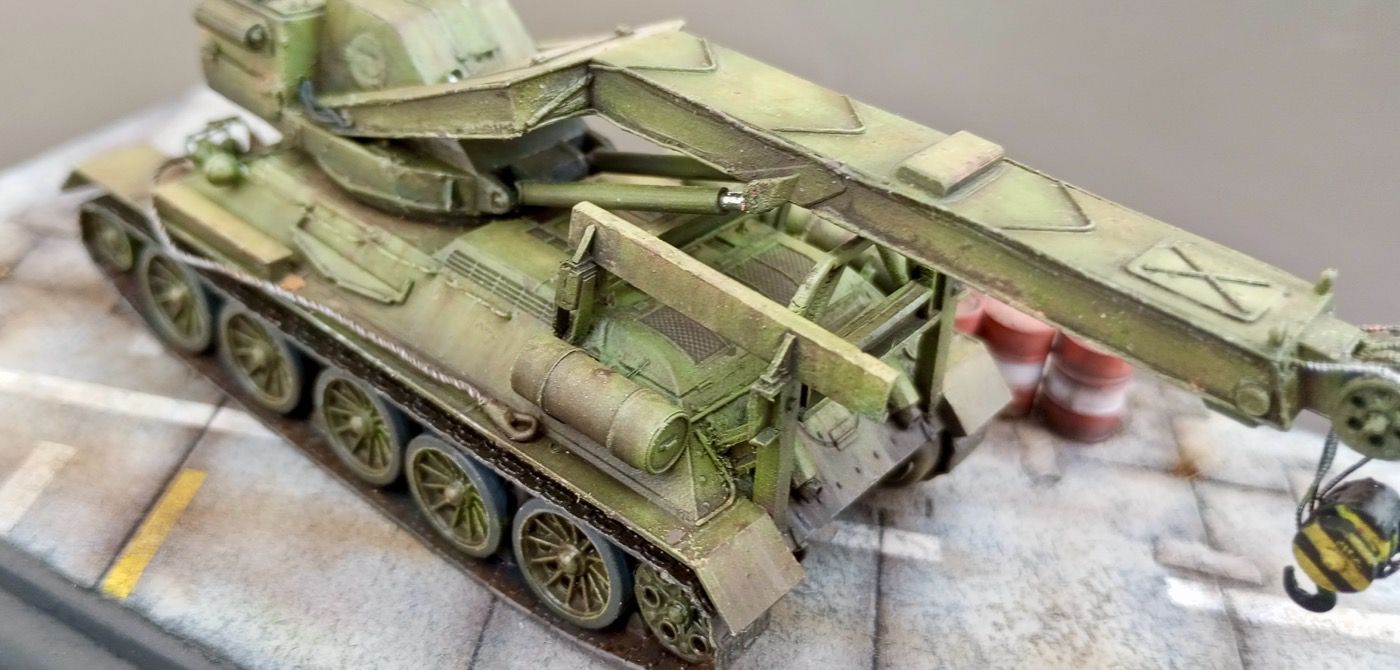
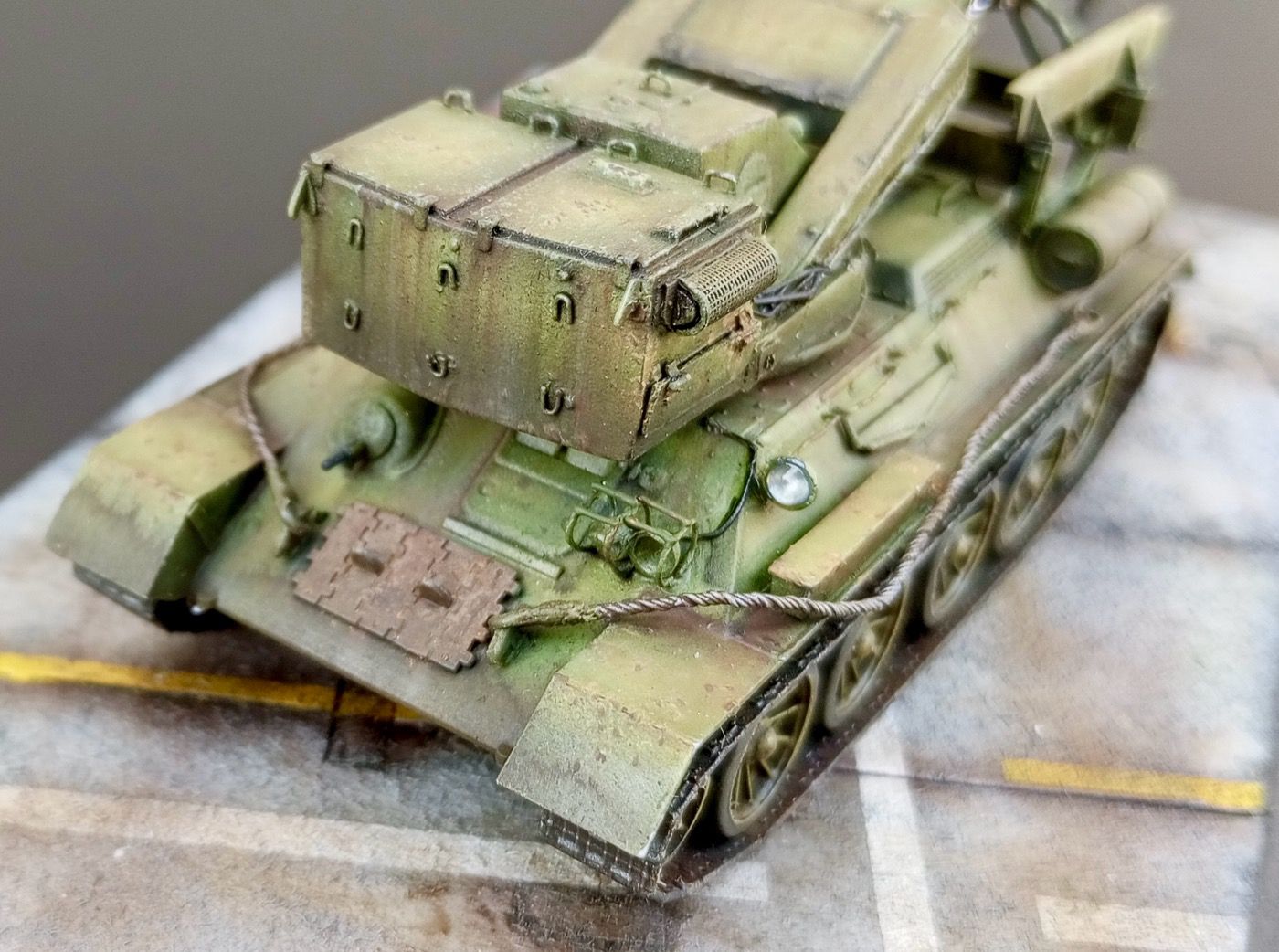
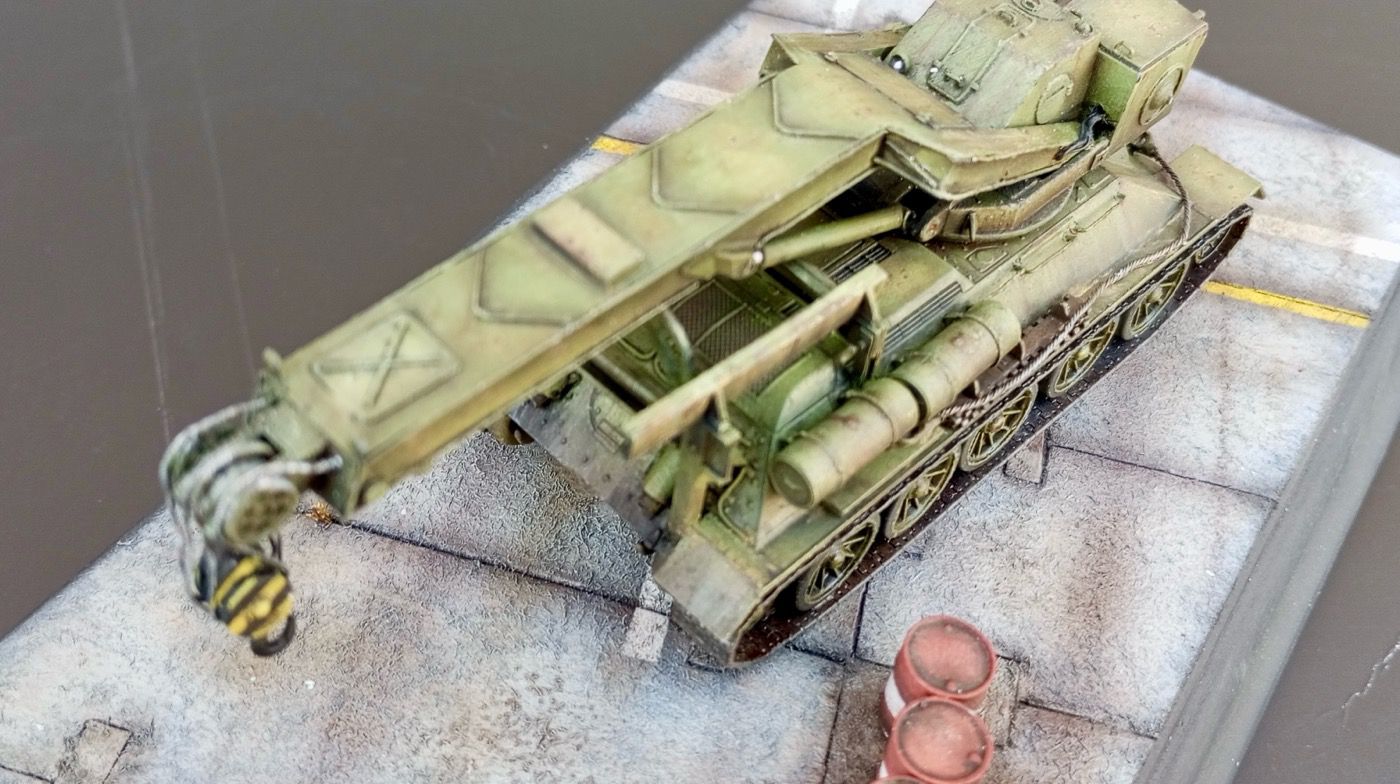
1/72 Czechoslovakian Jt-34 Crane.(conversion from Zvezda T34/85) by Zsolt Czegle


Hello dear modeler,

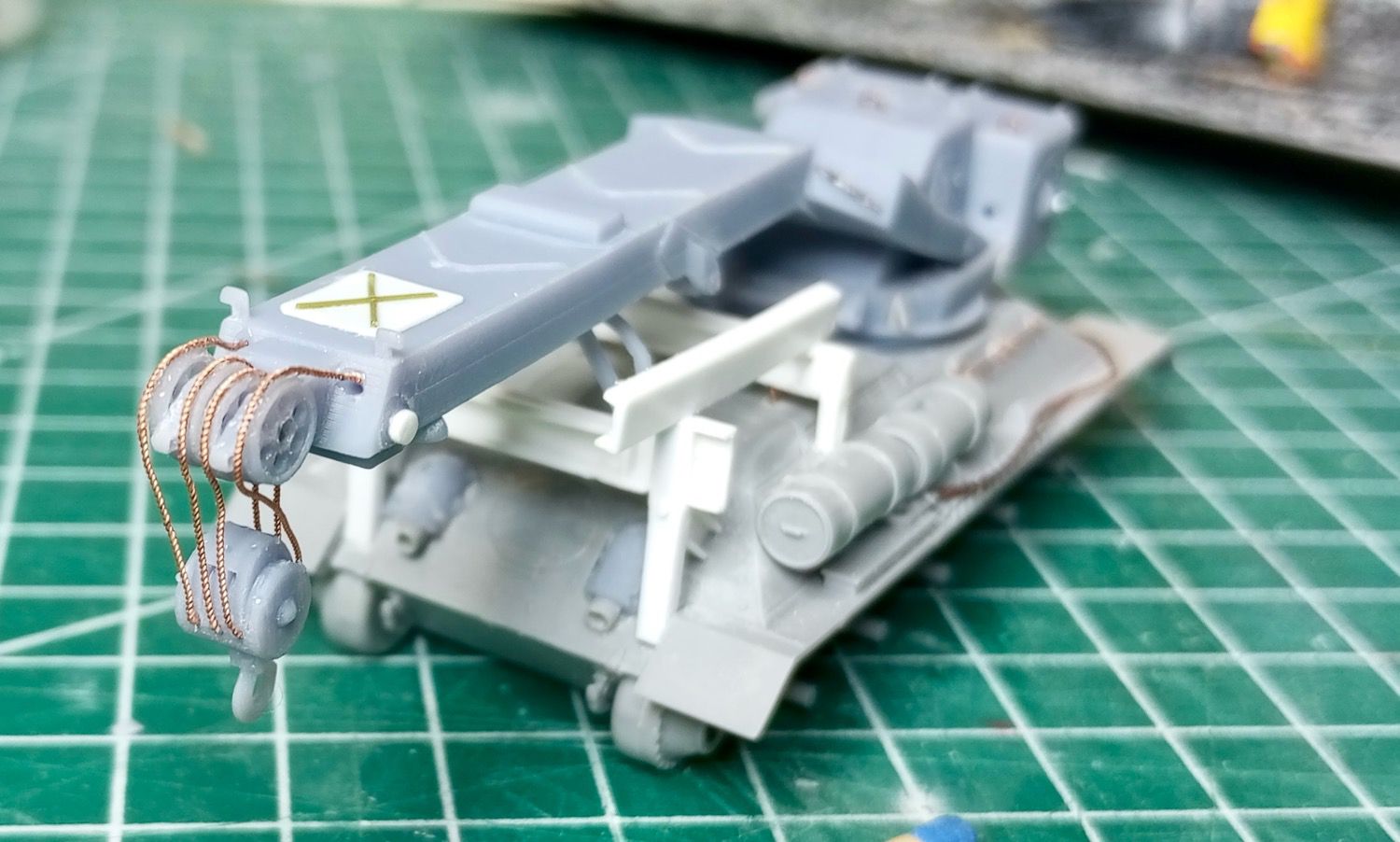
In 2023, at the Nitra Model Show in Slovakia, I discovered the Slovakian small-serie manufacturer Armor Models, at whose stand I saw this unusual Czechoslovakian crane vehicle on the T-34 chassis. I immediately liked the structure because it combined two of my “weak points”: tanks and work machines. There was no question that I had to buy it!

Later I bought a Zvezda T-34-85 model, which served as the basis for the vehicle.

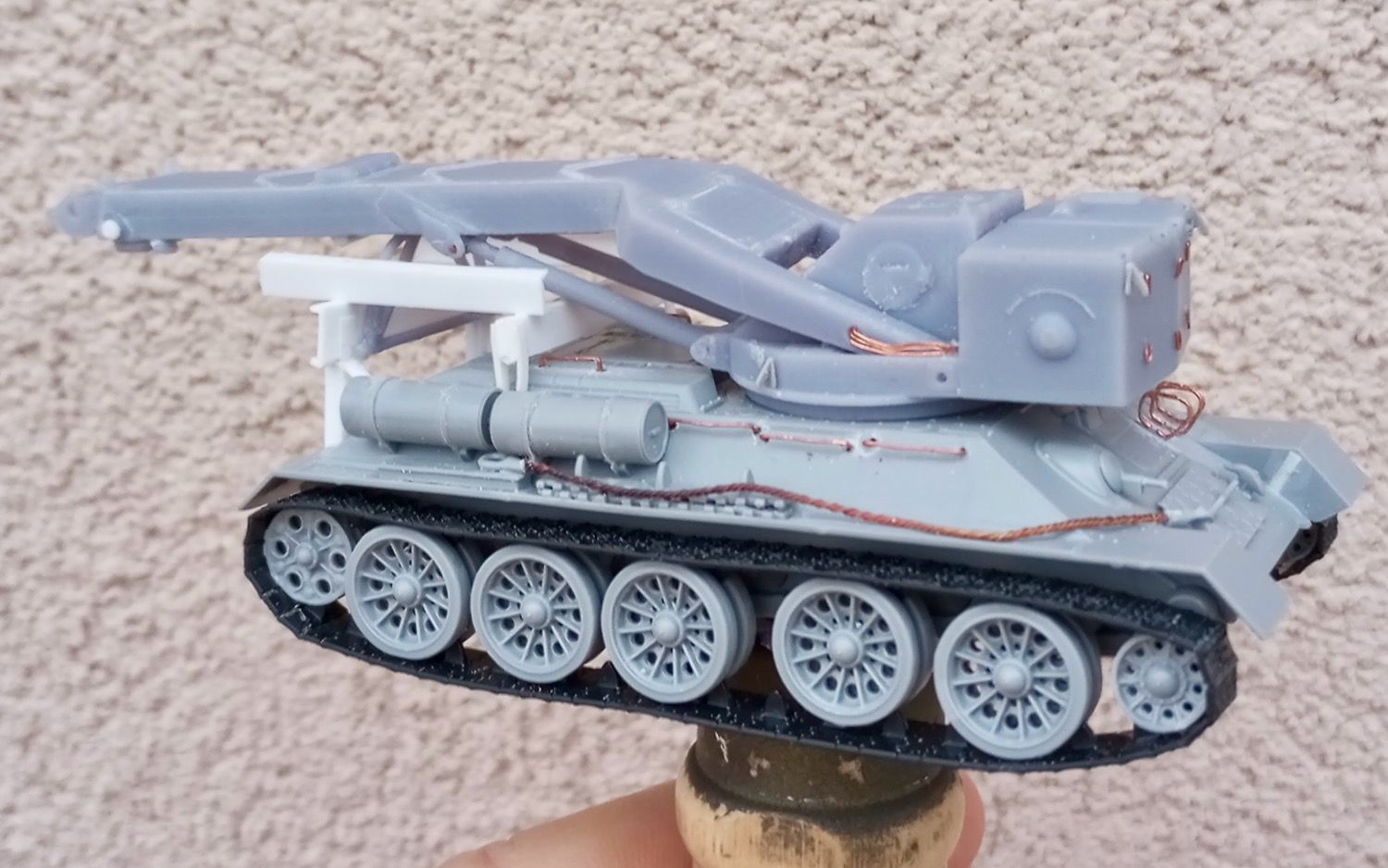
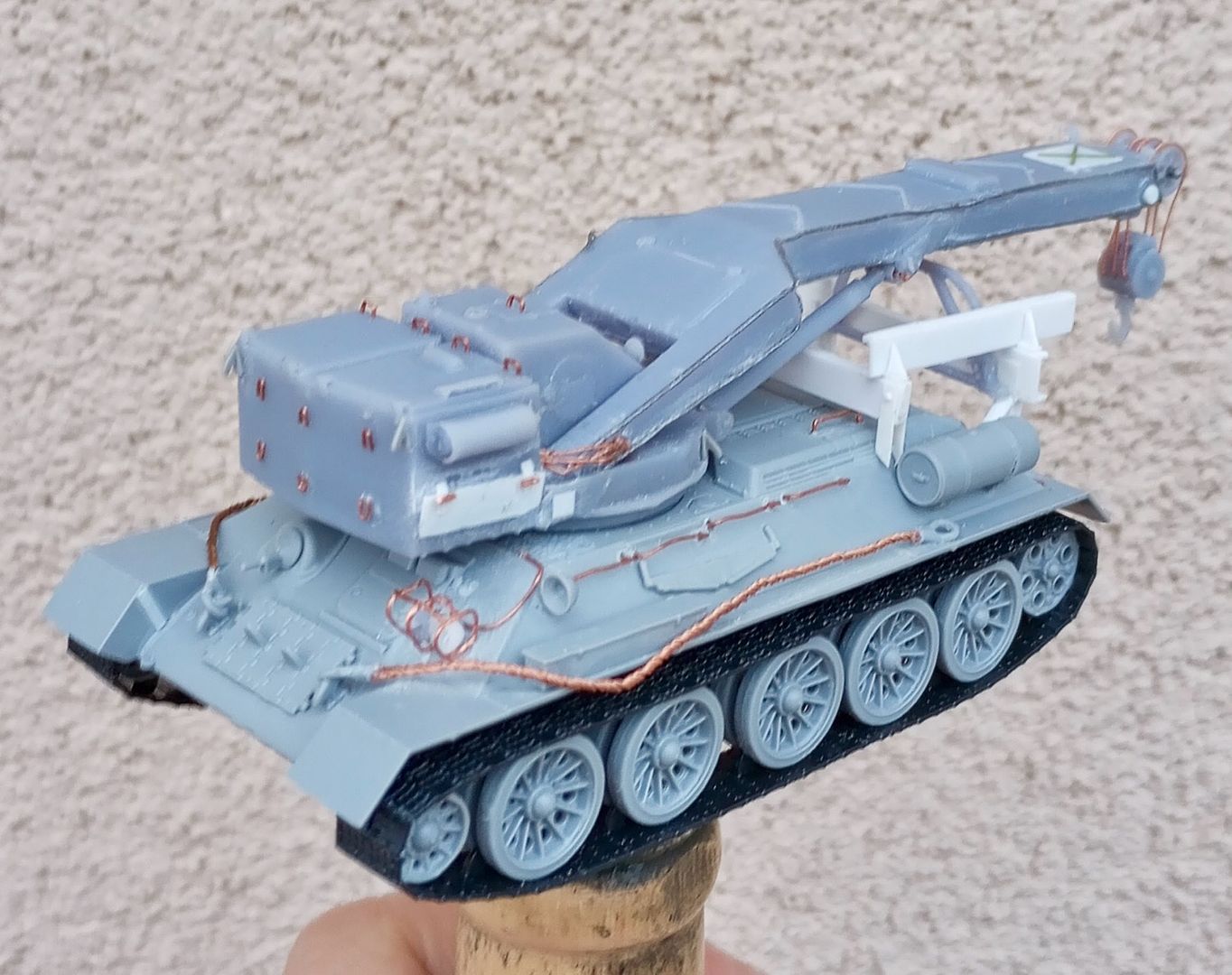
On the basic model I replaced the handrails with copper wire and made the tow ropes from copper wire as well.

The conversion kit contains 3D printed parts. After sanding the print layers, I assembled the crane boom. Based on the information I found on the Internet, I copied some of the details myself: handrails, hooks and the steel cable. While building/sanding I broke parts of the supporting structure made from iron beams, which I rebuilt from strips of styrene.

The painting and priming were done with AK acrylic paints. This time I didn't use any decals so the vehicle was sealed with a semi-gloss finish. After the enamel pinwash, I shaded the model with Ammo Shader and imitated the fading with oil paints, the signs of wear with liquid pigment and watercolor pencils.

On the base I made the concrete imitation out of cardboard, which I painted with 50 shades of gray 😉.

I hope you like the end result as much as I do.

Thank you very much for your attention!

Zsolt Czegle..

Thank you for sharing dear Zsolt...

Erhan...


free counters